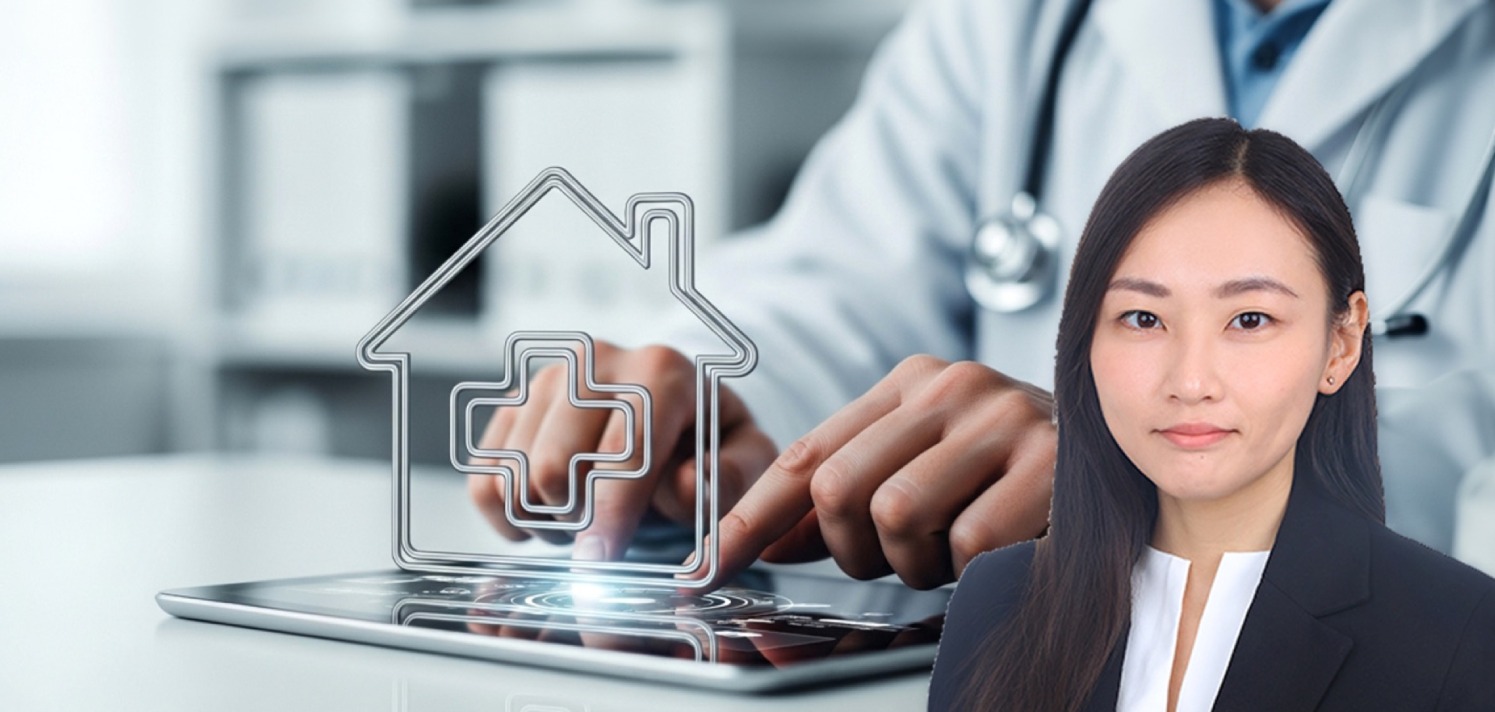
Authored by Jayce Chua, Manager, Advisory & Technology at IPI Singapore
- Home-centred healthcare is rising globally, driven by ageing populations, technological advancements, and preventive care.
- Wearables, ambient sensors, and smart-home systems are transforming living spaces into environments that support home health care and daily monitoring.
- Rehabilitation technologies, virtual platforms, and remote-care models are strengthening home care services by empowering patients to recover safely and independently at home.
Not so long ago, “going to the doctor” meant exactly that, a trip to the clinic, a queue at registration, and a face-to-face consultation. But quietly, and faster than many expected, the centre of gravity in healthcare is shifting, a change accelerated by the COVID-19 pandemic. Today, some of the most important health decisions, early warnings, and recovery moments are happening in our homes.
This shift was echoed at IPI Singapore’s annual flagship event, TechInnovation 2025, where innovators, clinicians and solution providers gathered to discuss what care will look like in the next decade. Across these conversations, one theme consistently emerged: the home is no longer just where we live, it is becoming where we heal, monitor, and make proactive choices about our wellbeing.
Care Is Moving Beyond Hospitals
Healthcare delivery is shifting everywhere. In Singapore, an ageing population and the national Healthier SG initiative are accelerating demand for care models that bring treatment closer to home, supporting ageing in place, empowering families to manage conditions confidently, and reducing the stress and cost of repeated hospital visits through better coordinated services.
This movement is part of a global trend. In the United States, the Mayo Clinic’s Advanced Care at Home programme delivers hospital-level treatment directly into patients’ homes, from daily virtual rounds to IV therapy, mobile imaging and continuous monitoring. Evaluations show lower readmission rates, fewer hospital-acquired infections, and high patient satisfaction, proving that acute care can be both safe and effective at home.
Across the world in the Netherlands, the Buurtzorg model has transformed community-based care. Small, self-managed teams of nurses provide holistic support in patients’ homes, blending medical care with daily living assistance and social connection. This decentralised, relationship-centred approach has reduced administrative overheads, improved continuity of care, and is widely recognised as a global benchmark for home-based nursing.
These models demonstrate that when care moves closer to where people live, outcomes improve, and patients regain a greater sense of control. Singapore is now following a similar trajectory, supported by new technologies that make it easier to monitor, manage and deliver care beyond traditional settings.
From the Wrist… to the Bedroom… and the Bathroom
Wearables marked the first wave of this shift. What began as simple step counters has evolved into tools capable of detecting subtle physiological changes days, or even weeks, before symptoms appear. Singapore’s innovation ecosystem is contributing meaningfully to this spacethrough technologies such as non-invasive blood glucose monitoring and stress-tracking. These solutions allow individuals to track glucose levels without finger pricks and help caregivers better understand the emotional well-being of people who may struggle to express themselves, including autistic children or seniors with cognitive decline.
Sensing, however, is no longer limited to what we wear. Devices such as Spyder ECG, a lightweight continuous electrocardiogram (ECG) patch, enable multi-day monitoring of heart rhythms from home, capturing abnormalities that may not surface during a brief clinic visit. Emerging ambient systems, including contactless sleep monitoring sensor, which unobtrusively tracks respiratory rate, heart rate and sleep patterns further demonstrate how the home environment itself can become part of the health-monitoring infrastructure. For families caring for elderly relatives, infants or patients with chronic conditions, such passive sensing can offer reassurance and early warning without demanding active engagement, adding another layer of meaningful assistance to daily care routines.
Some of the most fascinating innovations are appearing in unexpected places, the bathroom. Globally, a new generation of smart-toilet technologies is turning an everyday routine into a source of health insights. By analysing hydration levels or biomarkers in urine and stool, these systems can offer early cues about metabolic, renal or digestive changes. It may sound futuristic, but the concept is straightforward: our bodies generate valuable information every day and we are now learning how to capture it in effortless, unobtrusive ways.
Together, wearables and ambient sensors point towards a future where health monitoring becomes almost invisible, seamlessly integrated into rooms, objects, and daily rituals we rarely think about.
Treatment and Recovery at Home
Healthcare at home is no longer limited to monitoring; it is increasingly focused on active recovery. Around the world, rehabilitation that once required frequent clinic visits is now supported by technologies that guide therapy, track progress, and help patients regain function from the comfort of home.
The shift is evident across multiple domains. In upper-limb rehabilitation, lightweight smart-assist devices are helping patients practise controlled movements and rebuild strength independently, turning repetitive therapy exercises into structured home-based routines. Neuro-integrative wearables are taking this further by combining muscle-sensing, tactile feedback and motion analysis to retrain motor pathways, a promising development for stroke survivors or individuals recovering from neurological injuries who need frequent, consistent practice that is hard to sustain in traditional outpatient settings.
Cognitive and neurological rehabilitation is evolving as well. Immersive virtual reality platforms now allow patients to rehearse daily tasks or navigate simulated environments that support memory, coordination and executive function, all without leaving home. These experiences not only improve engagement but also provide therapists with quantitative insights into patient progress, enabling more personalised recovery plans with tailored assistance.
A New Era of Home-Centred Care
Globally and in Singapore, healthcare is shifting from clinics to connected homes, and from episodic intervention to continuous support. For innovators and care providers, this creates new opportunities to design technologies and services that meet people where they are.
As an innovation catalyst, IPI Singapore supports this transition by connecting innovators with suitable partners, facilitating technology transfer, and helping enterprises adopt solutions that improve outcomes and operational efficiency.
For organisations exploring home-based healthcare solutions or looking to scale innovations in this space, working with the right ecosystem partners can make a meaningful difference in moving from concept to real-world impact. Connect with us to discover collaborators, technologies and expertise that can accelerate your journey toward the future of home-centred care.