Zero Waste Industries - Enhancing waste segregation to enhance recycling efficiency
Background
Despite deploying recycling bins throughout JTC estates and buildings, JTC continues to face a persistent challenge where users frequently dispose non-recyclable waste into the designated recycling bins, leading to contamination of recyclables. Effective waste segregation at source is critical to strengthening recycling outcomes, yet several challenges remain:
- Building users may be unaware of recycling guidelines or choose not to follow them, leading to recyclable materials being contaminated with general waste
- The presence of recycling bins alone does not ensure proper usage, as users may not fully understand the environmental and operational implications of improper disposal
- Contaminated recycling streams increase the complexity and cost of downstream sorting and processing, which may result in recyclable materials being diverted to general waste, reducing the overall effectiveness of JTC’s recycling and waste segregation initiatives
Requirements
Proposed technologies and/or solutions should meet the following criteria:
- Technology readiness level (TRL) of 7 or above
- Scalable and cost-effective
- Able to ensure safety and continuity of operations
- Innovative and not yet deployed at large scale
- Encourage and reinforce improved user behaviour, rather than relying on user behaviour as a prerequisite for success
Desired Outcome
The envisioned solution shall:
- Provide pre-emptive mechanisms to guide and correct user behaviour where necessary, such as alerts issued prior to incorrect waste disposal
- Be a plug-and-play solution that is easy to deploy and enables baseline waste profiling
- Achieve at least a 50% improvement in waste segregation at source, with recyclable materials correctly disposed of in designated recycling bins and general waste placed in the appropriate bins
Possible Solution
Potential approaches could combine smart bin technology, real-time monitoring, and user engagement strategies to prevent contamination, promote proper disposal habits.
Development Timeframe
| Step | Task | Start | End |
|---|---|---|---|
| 1 | Proof of Concept and Baseline Waste Profiling | To | To + 3 months |
| 2 | Performance Verification | To + 3 months | To + 12 months |
Additional Info
The solution will be tested at Biopolis. Interested participants are encouraged to visit the sites arranged by JTC, kindly register via the link to access further details.
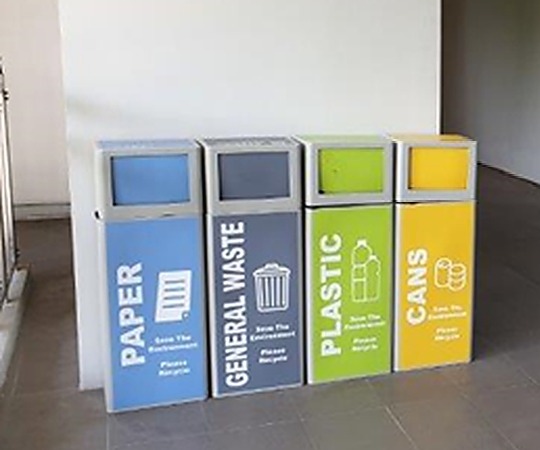
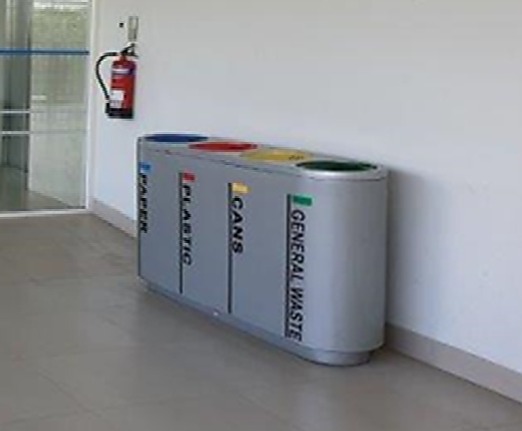
Examples of typical recyling bins deplayed at JTC buildings/estates:
JTC Decarbonisation Living Lab Innovation Call 2026 (DECAL 2.0)